
FLL 2024: Rules for M02 Shark FIRST LEGO League 2024-2025 SUBMERGED Challenge
The shark was just tagged for research - release it back into its habitat.
- #2368
- 31 Aug 2024
The shark was just tagged for research - release it back into its habitat.

Securely dock the ship that contains the samples and artifacts your team has collected.
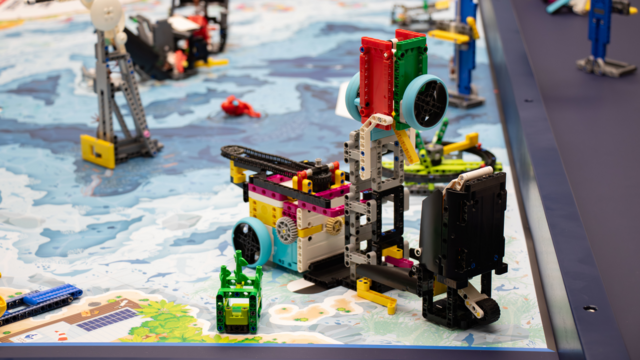

This video tutorial focuses on accomplishing M11 Sonar Discovery and M12 Feed the Whale of the FIRST LEGO League 2024-2025 SUBMERGED Challenge using the Nautiq box robot (a LEGO Education SPIKE Prime robot). The run uses a combined two-part attachment for maximum efficiency. The front section is designed to drop the krill into the Whale for M12, using a stationary beam to open the whale’s mouth and an angled beam to tip the krill container so they fall inside. Wheels are added as counterweights to prevent the container from opening during movement.
The rear section operates the sonar rotation for M11, using a chain-driven mechanism to transfer power from the robot to the mission model. A hooked beam is integrated at the end, allowing it to easily catch the yellow part of the sonar for rotation. This combined design allows the robot to complete both missions in one smooth, coordinated run without swapping attachments.
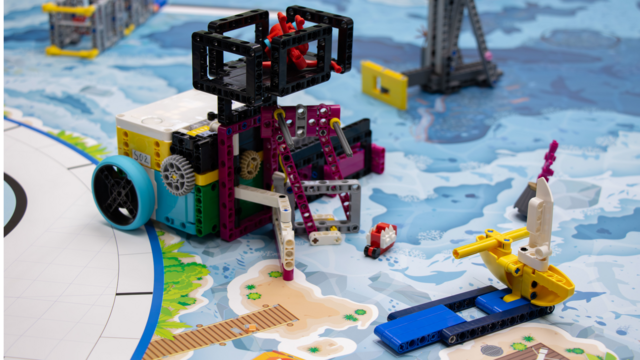
This video tutorial focuses on accomplishing M13 Change Shipping Lanes, and partially M09 Unexpected Encounter and M12 Feed the Whale of the FIRST LEGO League 2024-2025 SUBMERGED Challenge using the Nautiq box robot (a LEGO Education SPIKE Prime robot).
In this run, the robot flips the shipping lane model, collects the small Krill, and retrieves the Unknown Creature from the field by pushing on the mission model. These tasks are executed with precision to ensure that the robot not only scores the primary mission points but also safely returns the collected elements back to base. The sequence is optimized to minimize travel time between missions while maintaining accuracy and control over the robot’s attachments.
We use a pinless, three-in-one design attachment for completing multiple missions in one run. At the front, an angled rubber band mechanism handles M13 Change Shipping Lanes, allowing the robot to launch straight from base without extra positioning.
On one side, a passive curtain mechanism like a cage captures the single Krill for M12 Feed the Whale. On top, a secure basket catches the Unknown Creature from M09 Unexpected Encounter after a push with the robot’s back. The attachment is optimized for quick and reliable mission execution without additional motors.
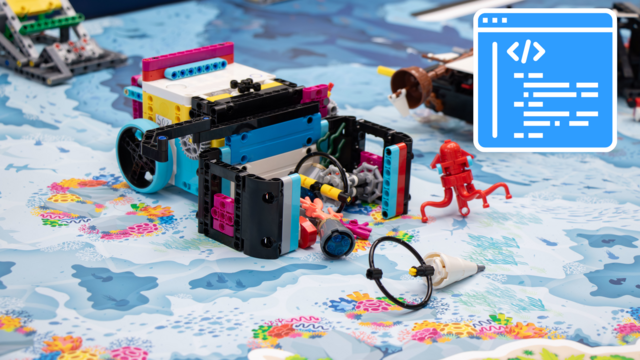
The programming process for accomplishing M05 Angler Fish, M09 Unexpected Encounter, M14 Sample Collection, M12 Feed the Whale, and M03 Coral Reef of the FIRST LEGO League 2024-2025 SUBMERGED Challenge is streamlined, making it easier to manage even in a large multi-mission run. The design of the two-part attachment system significantly influences how the robot moves, simplifying the code and reducing complexity.
The program is surprisingly simple for such a comprehensive run, with the robot performing a series of maneuvers to collect, deliver, and push mission elements. For maximum accuracy, it uses gyro turns, slow acceleration, and reduced speed in trickier spots to maintain control. By letting the attachments guide much of the interaction, the programming remains clean and reliable, enabling the robot to handle multiple scoring tasks efficiently in a single trip.
No Equipment Constraint: The mission model cannot earn points if it is touching equipment at the end of the match.
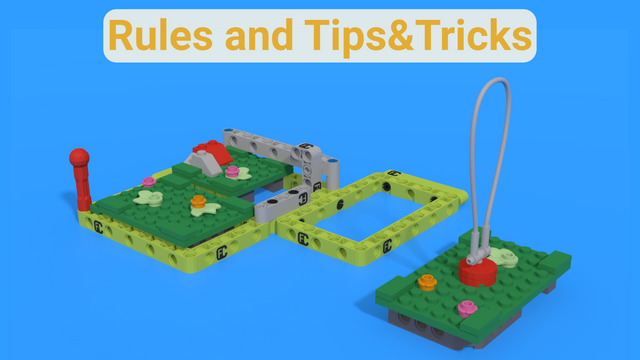
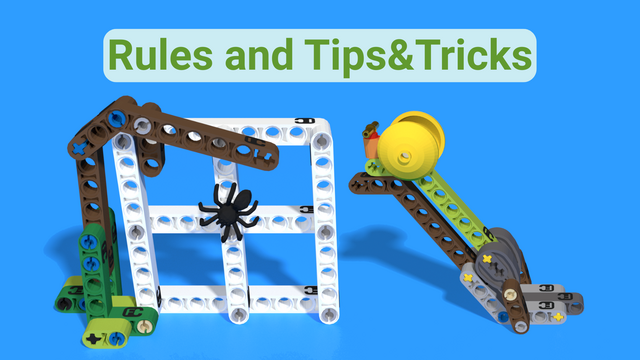
No Equipment Constraint: A mission model cannot earn points if it is touching equipment at the end of the match.
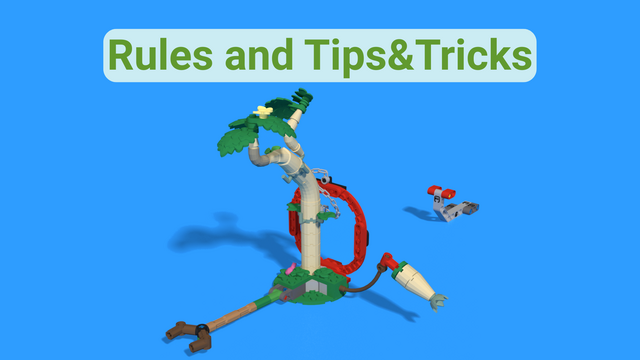
No Equipment Constraint: A mission model cannot earn points if it is touching equipment at the end of the match.

In this video we discuss how do we transfer power from the motors that are "inside the robot box" to the gear wheels that are "outside the robot box".

Second active pinless attachment for the robot construction. It is placed in the top/right corner of the robot and includes an interesting gear system for transferring the power. The attachment is suitable for complete rotations.

This is a third example for adding an active attachment. This third attachment is now connected to the wheel at the front of the robot. Again, the attachment could be easily extended.

One more example for an active attachment with a system of gear wheels. This time the system is constructed so that the attachment could lift heavy objects.

This is the first Active Pinless Attachment for the Box competition robot. The attachment is placed on the top of the robot and is controlled by one of the motors.
