
FLL 2024: Rules for M12 Feed the Whale FIRST LEGO League 2024-2025 SUBMERGED Challenge
Krill are a whale’s favorite food! Collect the krill and feed them to the hungry whale.
- #2378
- 31 Aug 2024
Krill are a whale’s favorite food! Collect the krill and feed them to the hungry whale.

Adjust the cargo ship’s route to safely avoid whale migration routes by moving to another shipping lane.
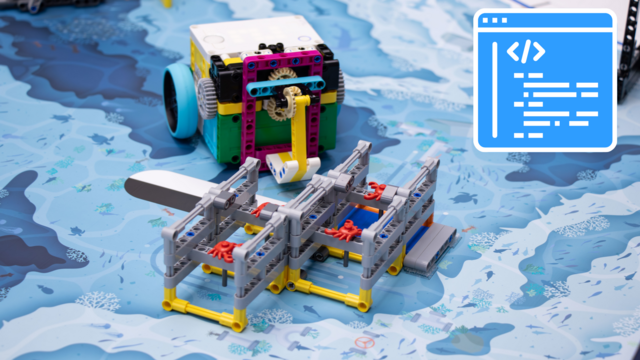

This programming tutorial focuses on accomplishing M8 Artificial Habitat of the FIRST LEGO League 2024-2025 SUBMERGED Challenge using the Nautiq box robot (a LEGO Education SPIKE Prime robot).
The sequence is optimized to position all four crabs upright with their yellow bases touching the mat for maximum points. The code uses straightforward but highly accurate movement commands, ensuring the robot engages and adjusts the mission model with precision. This dedicated program minimizes errors and allows for consistent high-scoring runs, combining efficient programming with the attachment’s reliable design.
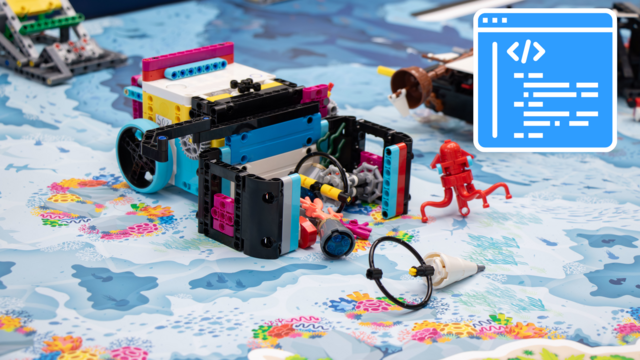
The programming process for accomplishing M05 Angler Fish, M09 Unexpected Encounter, M14 Sample Collection, M12 Feed the Whale, and M03 Coral Reef of the FIRST LEGO League 2024-2025 SUBMERGED Challenge is streamlined, making it easier to manage even in a large multi-mission run. The design of the two-part attachment system significantly influences how the robot moves, simplifying the code and reducing complexity.
The program is surprisingly simple for such a comprehensive run, with the robot performing a series of maneuvers to collect, deliver, and push mission elements. For maximum accuracy, it uses gyro turns, slow acceleration, and reduced speed in trickier spots to maintain control. By letting the attachments guide much of the interaction, the programming remains clean and reliable, enabling the robot to handle multiple scoring tasks efficiently in a single trip.
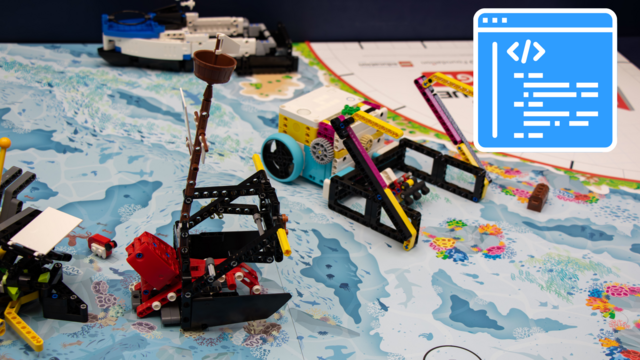
The programming process for accomplishing M06 Raise the Mast and M07 Kraken’s Treasure of the FIRST LEGO League 2024-2025 SUBMERGED Challenge is streamlined, focusing on controlled movement and precision. The design of the attachment ensures that the mast is lifted to the correct height while the treasure chest is securely captured.
The code uses simple maneuvering to reach the mission model, but the return path requires special handling. If the robot makes a sharp turn, the chest can be lost, so the program uses light steering to maintain stability while returning to base. This combination of straightforward navigation and careful return control ensures consistent success for both missions in a single run.
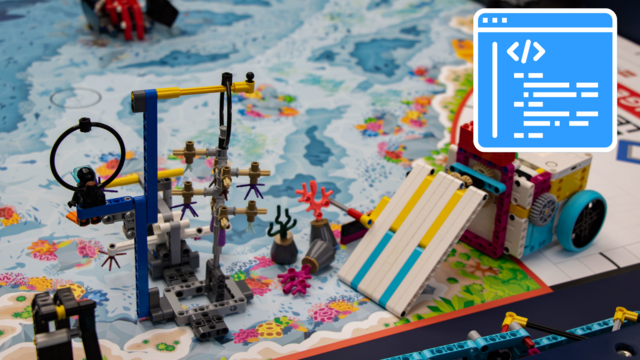
The programming process for accomplishing M01 Coral Nursery and M03 Coral Reef of the FIRST LEGO League 2024-2025 SUBMERGED Challenge is straightforward, focusing on controlled movement and stability. The motor-powered attachment lifts the coral tree smoothly to the coral tree support while also delivering reef segments outside the launch area.
The robot moves forward to position itself, raises the coral tree, and then returns to base. To ensure the reef segments remain secure during the run, the program uses slow acceleration and reduced speed when needed. This simple yet reliable approach keeps the sequence easy to execute while maintaining consistency in performance.
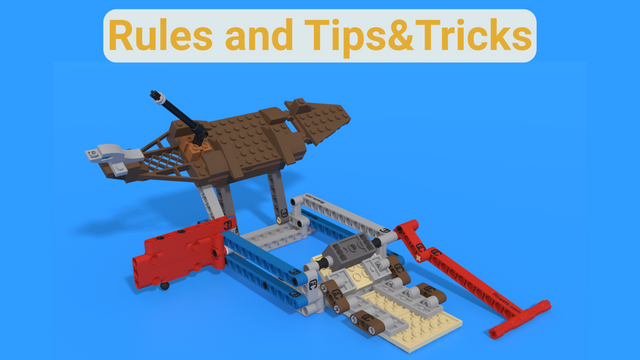
Sand is considered completely cleared when the pull activator is past the line on the mat.
No Equipment Constraint: The mission model cannot earn points if it is touching equipment at the end of the match.
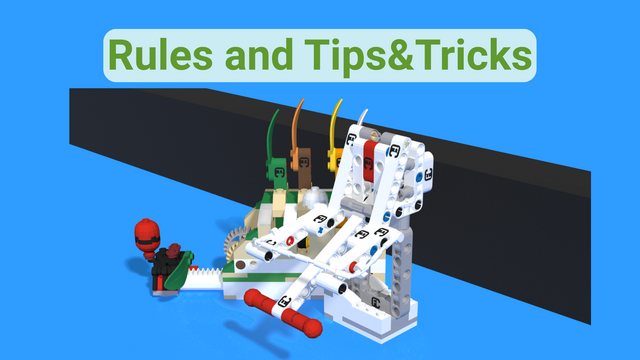
No Equipment Constraint: A mission model cannot earn points if it is touching equipment at the end of the match.
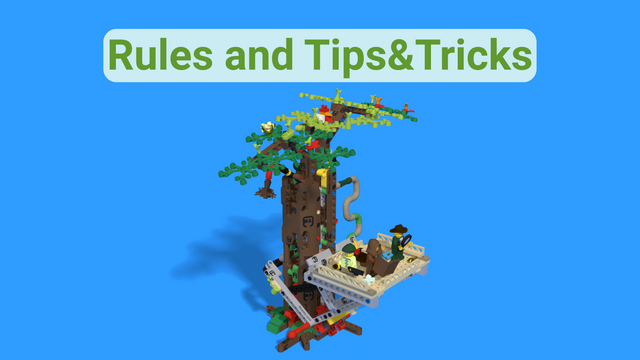
No Equipment Constraint: A mission model cannot earn points if it is touching equipment at the end of the match.
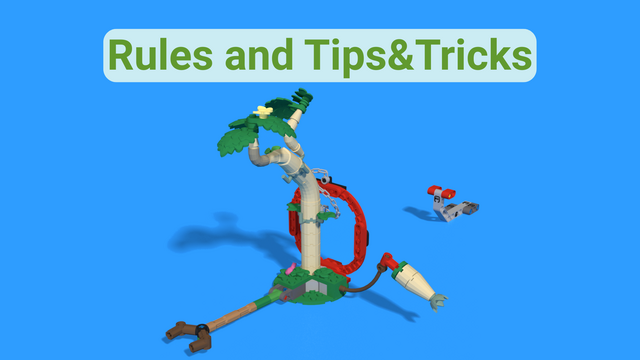
No Equipment Constraint: A mission model cannot earn points if it is touching equipment at the end of the match.

This is the oldest and most classic problem in the field of robotics. Shaft in an opening. Basically robotics and in improvement of many of the actuators is about improving the solutions to such problems. Let's see how we ca do this using a mission model from the FIRST LEGO League (FLL) competition.


